Running a Sex Offender Search in Fayette County
The Georgia Sex Offender Registry is the official public starting point. GBI and GCIC manage the central system under O.C.G.A. §42-1-12, while county sheriffs register and verify local information. A Fayette County filter supports local awareness; a name search works better when a legal name or alias is already known.
Compare the photograph, physical description, offense and conviction jurisdiction, address details, and registration status. A common name, changed name, stale address, or data-entry issue can produce a mistaken assumption. Questions about local accuracy or compliance should go to the sheriff rather than to the listed person.
Searching the Georgia Sex Offender Registry
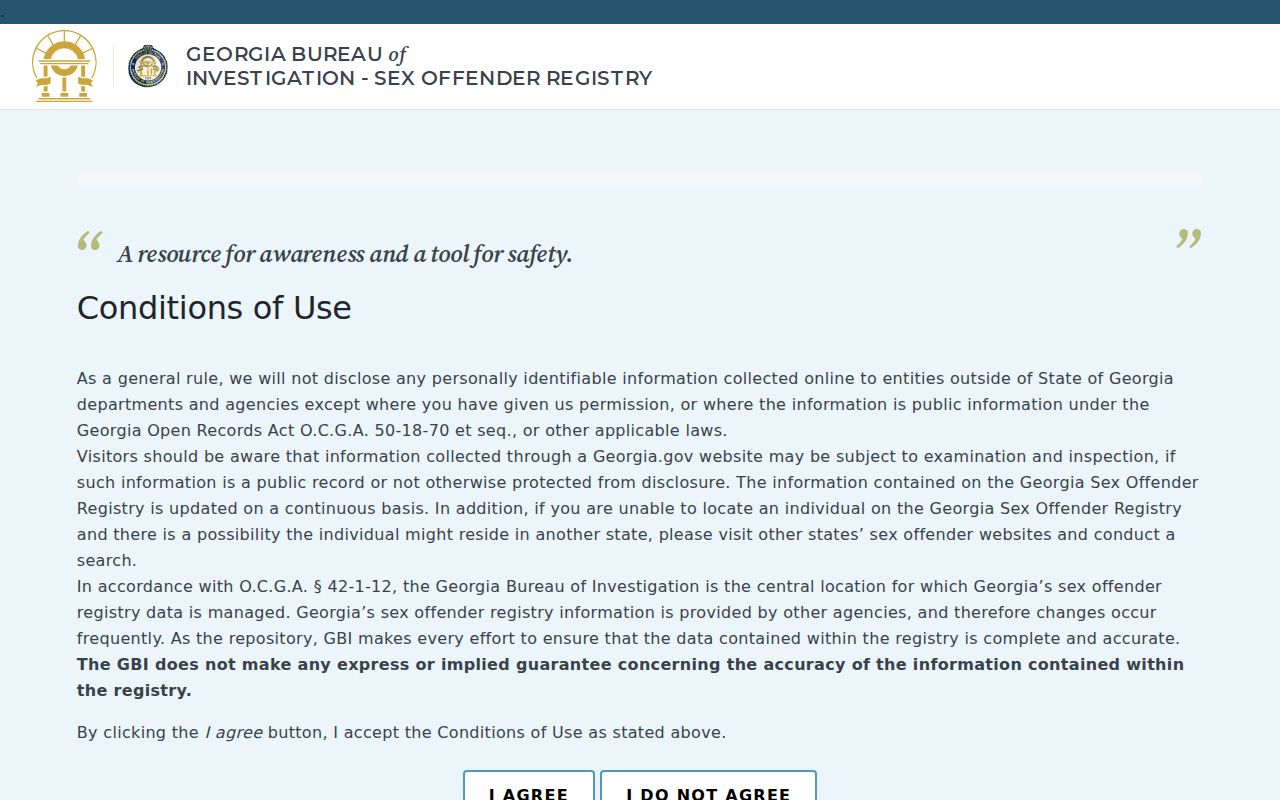
The public interface offers both basic and gated advanced paths. Users must accept the conditions before reaching some advanced options. A search can use identity, location, offense, or status fields, and results should be narrowed carefully rather than treating the first match as conclusive.
- Open the official registry and review its conditions and accuracy notice.
- Choose a name search or a Fayette County geographic search.
- Compare several identifiers in the result list before opening a profile.
- Read status, address, offense, and verification details, then contact the sheriff about errors.
| Search field | Type | Access note |
|---|---|---|
| Last name, first name | Text | Useful for a known legal name |
| Sex | Select | Optional identity filter |
| Offender type | Select | Advanced filter |
| Offense | Select | Advanced filter after conditions |
| County, city, ZIP | Select or text | Supports Fayette County location searches |
| Street name | Text | Advanced geographic filter |
| Level | Select | Level 1, Level 2, SDP, Not Leveled, Cannot Level |
| Absconded | Checkbox | Status filter |
Fayette County Registry Profile Fields
A public profile combines identity, residence, offense, conviction, classification, and agency information. It is broader than a simple name list but narrower than the complete court file. The profile may describe a nontraditional residence such as a vehicle, vessel, or mobile home because Georgia law accounts for people without a standard street residence.
| Name and aliases | Published identity names linked to the registration |
|---|---|
| Photograph and description | Photo plus physical identifiers used to compare a possible match |
| Address information | Residence, employment, school, volunteer, and nontraditional residence data as applicable |
| Offense record | Offense, conviction date, and conviction jurisdiction |
| Registry details | Registration date, risk level, status, and updating agency |
| Vehicle information | Published vehicle data where applicable |
The public profile does not reproduce every pleading, order, or fact in the conviction case. Use the court of conviction to understand the underlying judicial record.
Name Search or Fayette County Map Search?
A name search is efficient when a reader knows a registrant's legal name or alias. A county, city, ZIP, or street search is better for broad community awareness. Each method can miss what the other finds: names change, addresses move, and someone connected to Fayette County may be registered elsewhere.
Geographic results are snapshots based on agency-supplied information. An address may be stale, and homelessness or a mobile residence may not map like a normal home. Searchers should not infer that a marker establishes current presence at a precise moment.
Georgia Levels in a Fayette County Search
Georgia's Sexual Offender Registration Review Board uses risk classifications that answer a different question from registration duration. Level 1 indicates low risk, Level 2 intermediate risk, and Sexually Dangerous Predator a high-risk designation with added review and supervision consequences. Not Leveled means classification is incomplete. Cannot Level reflects legal or classification limits and does not mean the person is unregistered or cleared.
| Registry label | Meaning | Typical reporting context |
|---|---|---|
| Level 1 | Low assessed recidivism risk | Annual sheriff verification generally applies |
| Level 2 | Intermediate assessed risk | Annual sheriff verification generally applies |
| Sexually Dangerous Predator | High-risk statutory classification | Semiannual reporting, monitoring, and residence approval provisions |
| Not Leveled | No completed classification | Does not remove registration duties |
| Cannot Level | Classification cannot be completed under applicable limits | Does not establish exoneration |
Georgia generally requires lifetime registration unless statutory relief applies, and incarceration time is excluded from the period. Risk label and duration should not be collapsed into a federal-style tier chart.
Why Fayette County Registry Data Changes
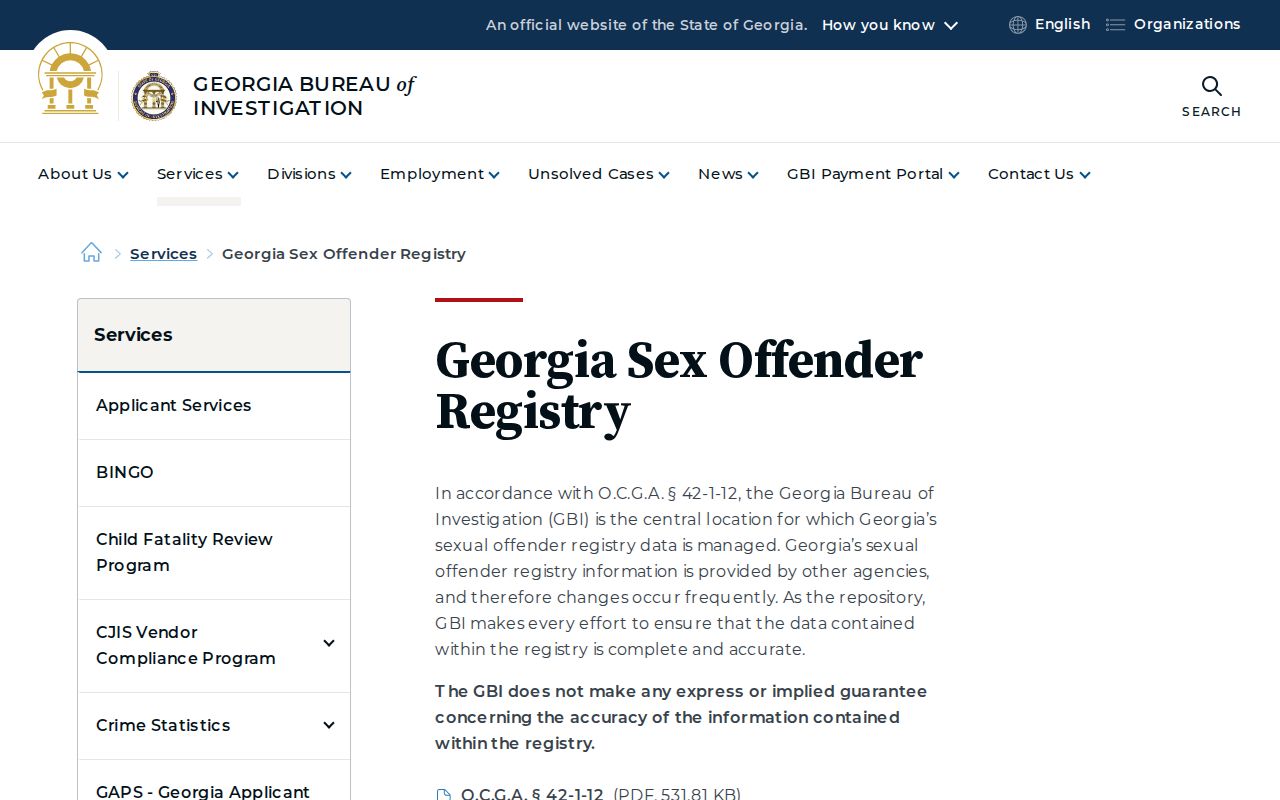
GBI says the registry is updated frequently, but it also warns that accuracy is not guaranteed. Sheriffs, courts, corrections agencies, and registrants supply events at different times. A move, release, supervision change, corrected identifier, or status update can alter a result.
Ordinary registrants generally report annually near their birthday, while a person classified as a sexually dangerous predator reports semiannually. Moving between Georgia counties requires advance notice to both the old and new sheriffs under statutory timing rules. Entering Georgia and release or supervision events can trigger separate reporting duties.
The official GBI registry information page explains authority and its accuracy limitation.
Not Leveled in a Fayette County Search
Not Leveled is easy to misread. It means the Sexual Offender Registration Review Board has not completed a risk classification, not that no qualifying conviction exists. Cannot Level also describes a classification limitation rather than innocence, removal, or permission to disregard the record.
Likewise, a risk label is not a prediction that a new offense will or will not occur. It should be read only in the framework defined by Georgia law and the registry. For the actual conviction and sentence, trace the court named in the profile.
Keep categories separate: Registration status, risk classification, and the outcome of a later court case are three different facts.
Fayette County and the National NSOPW Search
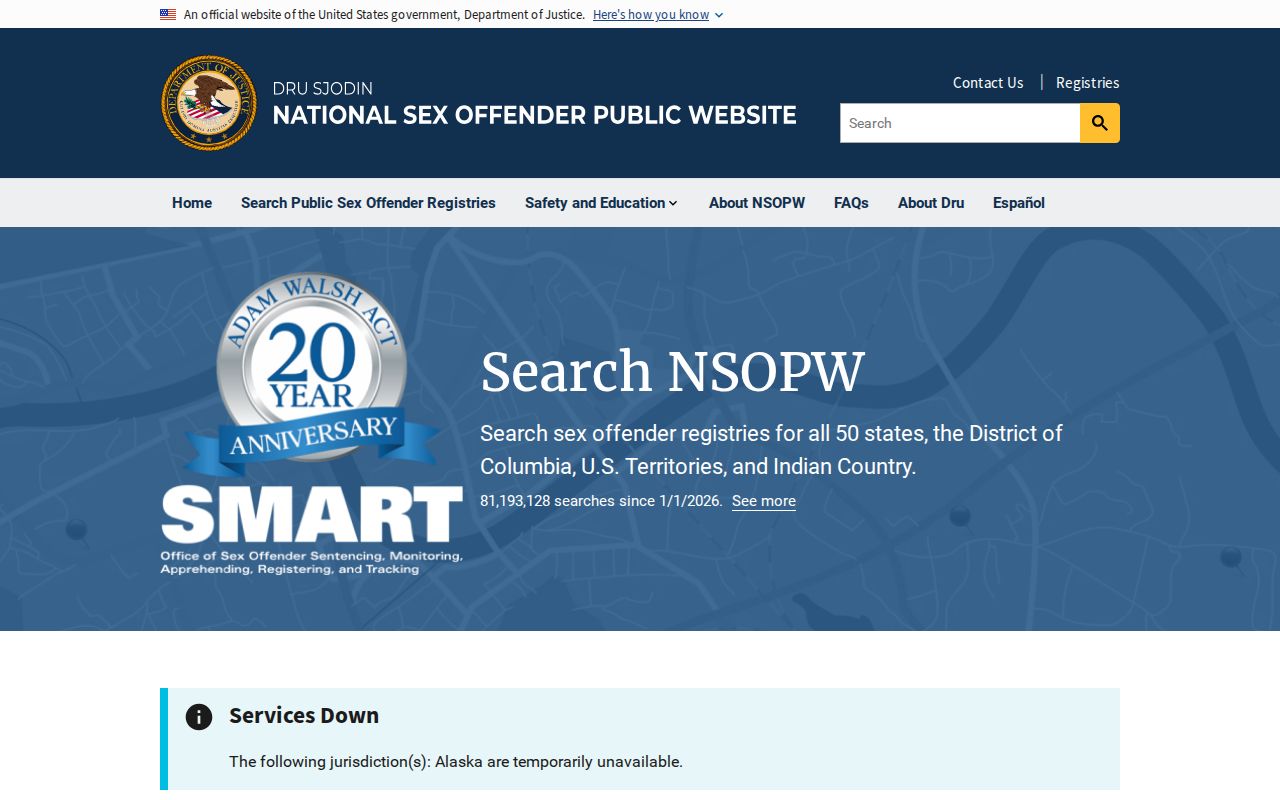
The National Sex Offender Public Website provides a cross-state search layer. It is useful when a name or location inquiry may extend beyond Georgia, but it does not replace the Georgia profile or verification by the registering sheriff.
Search coverage and update timing depend on participating jurisdictions. Return to the source registry when NSOPW produces a possible match, and compare identifiers instead of assuming that a shared name identifies the same person.
The official national portal broadens a registry search across jurisdictions.
Registration Duties in Fayette County
Georgia law requires qualifying registrants to provide identity, residence, employment, school, volunteer, vehicle, and other information as applicable. Duties can change with a move, a new job, schooling, release, or supervision. A profile may therefore change even when the underlying conviction does not.
Residency and activity restrictions are legal rules, not a simple map-radius promise. A public search should not be used to give a definitive property-specific legal opinion. Current questions belong with the sheriff and qualified legal counsel, especially when dates, offense categories, or statutory exceptions matter.
Using Fayette County Registry Information Lawfully
The registry exists for public awareness and safety planning. It is not permission to confront, threaten, shame, or interfere with a registrant or household. Report suspected noncompliance or inaccurate data to the Fayette County Sheriff or the agency shown on the profile.
Misuse warning: Under O.C.G.A. §42-1-12, registry information may not be used to harass or intimidate a registrant or family. Misuse can be punished by law.
A registry entry also should not be treated as proof of a new crime. For a current arrest allegation use official Fayette County arrest lookup channels, and for the conviction record use the court identified in the registry profile.
The official GBI public search form places the registry conditions before the search tools.